DA Expands ASF Vaccination Drive to Strengthen Hog Industry Recovery
AGRI-NEWS | Farming Posted on 2026-11-18 13:00:57
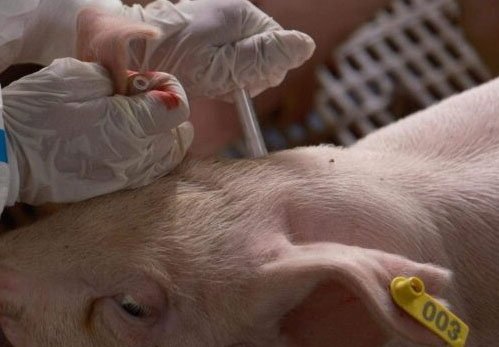
MANILA, Philippines — The Department of Agriculture (DA) is accelerating African Swine Fever (ASF) vaccination, biosecurity, and hog repopulation efforts as the government works to restore domestic pork production and strengthen the resilience of Filipino hog raisers.
The Bureau of Animal Industry (BAI) has administered 499,008 of the 500,000 available ASF vaccine doses from 2024 through the first half of 2026, achieving a 99.8 percent utilization rate.
The vaccination campaign has reached 54 farms across seven provinces, including 29 commercial farms, 13 semi-commercial farms, 11 smallholder facilities, and one government-operated farm. Tarlac recorded the highest number of vaccinated pigs at 287,620, followed by Batangas with 92,021 and Bulacan with 88,107. Other program areas include Pampanga, Rizal, Laguna, and Quezon.
Agriculture Secretary Francisco P. Tiu Laurel Jr. emphasized that the pace of vaccination must increase to support the country’s broader swine repopulation agenda.
“Vaccination must move faster and reach more farms if we are to make our repopulation program work. The goal is not just to contain ASF but to rebuild the swine industry to where it was before the disease struck,” Tiu Laurel said.
The Philippines’ swine population has not yet returned to its estimated pre-ASF level of 13 million heads in 2019. The DA views vaccination as a major component of its long-term recovery strategy, alongside surveillance, movement control, farm management, and strict biosecurity practices.
On August 27, the BAI registered Vietnam’s AVAC ASF Live Vaccine for commercial use in the Philippines, providing an additional tool for livestock producers and local governments in protecting vulnerable hog populations.
The DA is likewise expanding its Community Animal Biosecurity Interventions (CABI) program to help backyard hog raisers improve farm-level protection. Initially piloted in President Roxas, North Cotabato, the program has been extended to Solsona, Ilocos Norte; Bais City, Negros Oriental; and Mulanay, Quezon.
The four CABI areas cover 14 barangays and 258 backyard farmers, who receive biosecurity training and start-up materials designed to reduce the risk of ASF transmission.
A related Animal Biosecurity Champions Training program is being expanded in Ilocos Norte, Albay, and Cagayan Province. The program aims to develop local farmer-leaders who can share disease-prevention practices across their communities.
The DA has also released ₱49.824 million in indemnification assistance to ASF-affected farmers in eight regions under Administrative Order No. 4, Series of 2025.
As of October 22, ASF cases remained active in 236 barangays across 23 provinces. However, 716 cities and municipalities have been reclassified as buffer or surveillance zones, representing 64.68 percent of previously affected areas.
The DA said sustained vaccination, stricter biosecurity, and wider participation in repopulation programs will be essential to rebuilding the country’s hog inventory, safeguarding farmers’ livelihoods, stabilizing pork supply, and lowering dependence on imported pork.
By NPO News Team | DA-PR
Share:
Writer :
Link :
Leave a Comment:
Date: Wednesday | November 18, 2026 | 10:26:pm
Sections
Recent News
RECENT POSTS

Philippines Pushes for Lower US Export Tariffs as Marcos-Trump Trade Talks Take Center Stage
Category : Business
Read More →
Philippine Stocks Climb as Oil Prices Ease; Peso Holds Steady Against US Dollar
Category : Business
Read More →
PAX SILICA AND THE FUTURE OF THE PHILIPPINES: DEVELOPMENT, HUMAN WISDOM, AND THE LIMITS OF NATURE
Category : OPINION
Read More →