FIRST LADY LIZA ARANETA-MARCOS LEADS HISTORIC LAUNCH OF CLIMATE-SMART SCHOOL GREENHOUSES, INITIATED BY PRA, PHCC & DEPed POWERED BY FILIPINO-DEVELOPED BC AGRISYSTEM TECHNOLOGY
AGRI-NEWS | Farming Posted on 2026-11-01 08:19:51
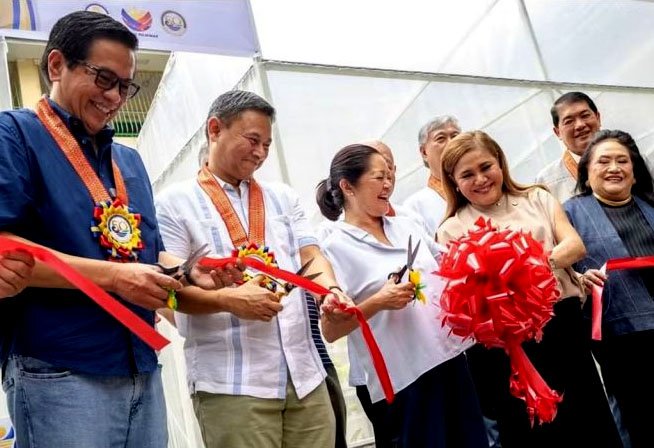
Philippine Reclamation Authority, Pasay Harbor City Corporation, Department of Education and Biorganism Corporation joined in Advancing Climate-Smart Agriculture, Digital Farming Education, and Youth Empowerment Across 200 Philippine Public Schools
MANILA, Philippines, October 29, 2026 — Marking a significant milestone in Philippine agricultural innovation, environmental sustainability, and educational transformation, the Philippine Reclamation Authority (PRA), in partnership with Pasay Harbor City Corporation (PHCC), the Department of Education (DepEd), and Biorganism Corporation, officially launched the AGRI TAYO – LAB FOR ALL Climate-Smart Greenhouse Program on October 29, 2026, at Las Piñas National High School and Parañaque National High School.
The
landmark initiative, attended by First Lady Louise “Liza” Araneta-Marcos
and Department of Education Secretary Sonny Angara, represents a major
step toward introducing modern agricultural technology, sustainable food
production, and hands-on scientific learning to public schools throughout the
Philippines.
The
program aims to establish 200 climate-smart hydroponic greenhouse facilities
in its initial phase, with a broader expansion target of 700 greenhouse
units nationwide, bringing agricultural innovation directly into the
country's educational system.
More importantly, the initiative demonstrates how Filipino-developed agricultural technology can become a powerful instrument for food security, climate resilience, digital transformation, and the development of a new generation of Filipino agricultural innovators.
FIRST LADY CHAMPIONS CLIMATE-SMART AGRICULTURE AND EDUCATIONAL INNOVATION

The
ceremonial launching brought together national government leaders, education
officials, local government representatives, agricultural technology
developers, and participating students.
Among the
distinguished participants were:
- First Lady Louise “Liza”
Araneta-Marcos
- Hon. Sonny Angara, Secretary, Department of
Education
- Atty. Alex Lopez, Chairman, Philippine
Reclamation Authority
- Members of the PRA Board of
Directors and other PRA officials
- Officials and
representatives of DepEd National Capital Region
- Congressman Mark Santos
- Hon. April Aguilar-Nery, Mayor of Las Piñas City
- Representatives of Pasay
Harbor City Corporation
- Officials, teachers, and
students of Las Piñas National High School and Parañaque National High
School
- Representatives of
Biorganism Corporation and its technology development partners
At Las
Piñas National High School, the First Lady joined national and local officials
during the ceremonial activities, including the ribbon-cutting ceremony led by
Mayor April Aguilar-Nery.
The First
Lady and Secretary Angara also inspected the newly installed greenhouse
facilities and interacted with students, highlighting the importance of
practical agricultural education and the role of technology in preparing young
Filipinos for the future.
The
occasion underscored the government's commitment to making agricultural
education more relevant, accessible, and responsive to the challenges of
climate change, food security, and technological advancement.
AGRI TAYO – LAB FOR ALL: BRINGING AGRICULTURAL INNOVATION INTO PHILIPPINE CLASSROOMS

The
program, known as:
AGRI TAYO – LAB FOR ALL
Advancing
Sustainable and Innovative Agriculture and Land Development
is
designed to transform participating public schools into centers of agricultural
innovation, experiential learning, and sustainable food production.
Through
the initiative, students will gain firsthand exposure to modern agricultural
practices using hydroponics, controlled greenhouse environments, and
technology-assisted crop management.
Unlike
conventional school gardening, which often depends on available soil, seasonal
rainfall, and manual cultivation, the program introduces modern agricultural
systems that can operate within limited spaces while improving the efficiency
of water and nutrient utilization.
According
to the Department of Education, the initiative strengthens the existing Gulayan
sa Paaralan Program (GPP) by introducing more advanced and space-efficient
agricultural production technologies.
Secretary
Sonny Angara emphasized that hydroponics can help schools overcome limitations
associated with inadequate land and unsuitable soil conditions.
He
further highlighted the water-saving potential of hydroponic farming, noting
that such systems can use significantly less water than traditional soil-based
agriculture.
The
technology is particularly relevant as the Philippines continues to confront
the risks associated with El Niño, prolonged dry seasons, changing rainfall
patterns, and other climate-related agricultural challenges.
Beyond
vegetable production, the greenhouses are intended to become living
laboratories, allowing students to understand the scientific principles
behind crop development, plant nutrition, photosynthesis, environmental
conditions, and resource management.
The
program also complements the strengthened Senior High School curriculum,
particularly Agri-Fishery Arts, technical-vocational education, scientific
experimentation, and entrepreneurship.
FILIPINO-DEVELOPED BC AGRISYSTEM TECHNOLOGY POWERS THE INITIATIVE

At the
technological foundation of the program is the Climate-Smart BC AgriSystem
Greenhouse, an integrated agricultural technology platform developed by
Filipino agritech innovator Henry V. Bayubay, through Biorganism
Corporation and BB 88 Advertising and Digital Solutions Inc.
The BC
AgriSystem represents an effort to move Philippine agriculture beyond
conventional greenhouse cultivation by combining agricultural production with
environmental monitoring, digital connectivity, practical education, and
market-oriented enterprise development.
The
system is designed to integrate several important technologies and operational
capabilities:
1.
Climate-Smart Greenhouse Technology
Modular
greenhouse structures designed to support more stable crop-growing conditions
while providing protection from excessive rainfall, insects, and certain
external environmental stresses.
2.
Hydroponic and Nutrient Management Systems
Nutrient
Film Technique (NFT) hydroponics allows crops to grow without conventional
soil, using circulating nutrient solutions to support plant development.
3.
Intelligent Environmental Monitoring
Integrated
sensors can monitor temperature, humidity, water conditions, and other
environmental parameters important to plant growth.
4.
Automated Environmental Support
Misting,
ventilation, and other control mechanisms can be incorporated to help regulate
greenhouse conditions and support healthier crop development.
5.
Digital Agricultural Monitoring
Mobile
and web-based monitoring capabilities enable authorized users to observe
greenhouse conditions, maintain planting records, and review agricultural
production information.
6.
Agricultural Learning and Technical Assistance
The BC
AgriSystem Learning Platform is designed to provide students, teachers, and
participating institutions with structured training materials, practical
agricultural knowledge, and technical support.
7.
Agricultural Entrepreneurship and Market Connectivity
The
broader BC AgriSystem ecosystem incorporates concepts for production
accounting, profitability monitoring, agricultural marketing, online trading,
and distribution through its proposed Bagsakan connectivity platform.
Together,
these technologies are intended to create a more comprehensive agricultural
learning and production environment.
Rather
than treating greenhouse cultivation as an isolated activity, the BC AgriSystem
promotes an integrated approach connecting technology, education,
agricultural production, entrepreneurship, and market participation.
ADVANCING HOMEGROWN FILIPINO
AGRICULTURAL TECHNOLOGY
The Climate-Smart BC AgriSystem Greenhouse technology was developed under the leadership of Henry V. Bayubay, a Filipino agritech innovator, digital transformation advocate, planner, and environmentalist. Bayubay currently serves as:
Vice President and General Manager, Filipino Inventors Society Multipurpose Cooperative (FISMPC), President and Chief Executive Officer- Biorganism Corporation and BB 88 Advertising and Digital Solutions Inc.
His work
focuses on integrating information technology, environmental monitoring,
digital platforms, and agricultural production into practical systems designed
for Philippine conditions.
Through
Biorganism Corporation, Bayubay has advocated the development of homegrown
agricultural technologies capable of supporting climate adaptation,
agricultural modernization, and long-term food security.
The BC
AgriSystem was conceived around the principle that the future of Philippine
agriculture must involve more than improving farming equipment or increasing
crop yields.
It must
also address the need to connect agricultural knowledge, technological innovation,
production management, financial sustainability, and market access.
The
initiative reflects Bayubay's broader advocacy to make agriculture more
attractive and accessible to younger generations through modern technologies.
By
introducing digital systems, automated monitoring, environmental sensors, and
data-driven agricultural practices, the program seeks to demonstrate that
farming can provide meaningful opportunities for students interested in
science, engineering, information technology, environmental management, and
entrepreneurship.
The
vision is to transform the perception of agriculture from a predominantly
labor-intensive activity into a modern, technology-enabled profession capable
of attracting the next generation of Filipino innovators and entrepreneurs.
REIGNITING THE INTEREST OF FILIPINO YOUTH IN
AGRICULTURE
One of
the most important objectives of the AGRI TAYO – LAB FOR ALL initiative is to
encourage greater youth participation in agriculture.
The Philippines
faces significant long-term challenges associated with the aging agricultural
workforce, generational succession, and the need to strengthen agricultural
expertise.
These
challenges highlight the importance of introducing agricultural science and technology
to students at an early age.
Through
the Climate-Smart BC AgriSystem Greenhouse, participating students will have
opportunities to experience farming through a different perspective.
Instead
of relying exclusively on traditional manual cultivation, students can explore
agriculture through digital monitoring, environmental sensors, hydroponic
production, agricultural data, and technology-assisted decision-making.
The
approach is intended to make agriculture more engaging for young Filipinos who
are already familiar with digital devices and modern technologies.
The
greenhouse can also serve as a practical platform for developing skills in:
- Agricultural science and
crop production
- Information technology and
digital monitoring
- Environmental sustainability
and climate adaptation
- Applied science, technology,
engineering, and mathematics
- Entrepreneurship and
agricultural business management
- Food production,
distribution, and community development
By
connecting agricultural education with contemporary technology, the initiative
seeks to encourage students to consider careers in agritech, agricultural
engineering, environmental science, food systems, and related industries.
The
long-term objective is not merely to teach students how to grow vegetables, but
to inspire them to become the next generation of agricultural scientists,
technology developers, farmers, and entrepreneurs.
STRENGTHENING FOOD SECURITY THROUGH SCHOOL-BASED
PRODUCTION
Beyond
its educational objectives, the program is expected to contribute to local food
production and promote awareness of sustainable food systems.
Vegetables
harvested from participating greenhouse facilities may help supplement
school-based nutrition initiatives, subject to production capacity, food safety
requirements, and applicable DepEd guidelines.
The
greenhouse facilities can also demonstrate how schools and communities may
produce vegetables within limited spaces.
This is
particularly important in highly urbanized areas where agricultural land is
scarce.
The use
of hydroponics offers opportunities to improve water-use efficiency while
reducing dependence on conventional soil cultivation.
When
properly operated and maintained, climate-smart greenhouse systems may also
help schools manage certain environmental risks affecting crop production.
However,
the actual productivity and water savings of each facility will depend on crop
selection, operating conditions, system maintenance, and the effectiveness of
greenhouse management.
The
initiative therefore combines food production with practical learning, allowing
students to understand the relationship between technology, resource
conservation, and agricultural sustainability.
PRA AND PASAY HARBOR CITY CORPORATION SUPPORT
SUSTAINABLE COMMUNITY DEVELOPMENT
The
participation of the Philippine Reclamation Authority and Pasay Harbor City
Corporation demonstrates the potential of institutional partnerships to support
education, environmental responsibility, and community development.
The
project is supported through the Social Environmental Fund associated with
reclamation projects, providing a mechanism for channeling resources toward
initiatives with educational, environmental, and community benefits.
Through
the AGRI TAYO – LAB FOR ALL program, these resources are being directed toward
climate-smart agricultural facilities that can serve public schools and their surrounding
communities.
The
initial phase targets 200 participating schools nationwide, with plans
for further expansion toward 700 greenhouse facilities.
Participating
areas identified for the initial rollout include Metro Manila and several
provinces, among them Cavite, Cagayan, Pangasinan, Pampanga, and Masbate.
The
program's implementation will require continued coordination among
participating government agencies, technology providers, local government
units, school administrators, and other institutional partners.
The
initiative demonstrates how collaboration between the public and private
sectors can help accelerate the adoption of locally developed technologies in
education and community-based agriculture.
FROM SCHOOL GREENHOUSES TO AN INTEGRATED
AGRICULTURAL ECOSYSTEM
Biorganism
Corporation envisions the Climate-Smart BC AgriSystem as part of a broader
agricultural ecosystem connecting schools, farmers, cooperatives, technology
developers, and agricultural markets.
Under
this approach, greenhouse facilities are not intended to function merely as
isolated planting structures.
Instead,
they can become interconnected centers for agricultural learning, technology
demonstration, sustainable production, and future enterprise development.
The
proposed ecosystem incorporates several interconnected components:
Agricultural
Production:
Climate-smart greenhouse cultivation and hydroponic vegetable production.
Agricultural
Education:
Structured learning modules, teacher orientation, student participation, and
technical training.
Digital
Monitoring:
Environmental sensors, production records, and agricultural information
management.
Agricultural
Enterprise Development: Production costing, financial literacy, entrepreneurship, and profitability
assessment.
Marketing
and Distribution:
Potential integration with digital Bagsakan trading systems and cooperative
distribution networks.
Community
Participation:
Opportunities for schools, local farmers, cooperatives, and community organizations
to participate in agricultural innovation.
This
integrated approach is intended to create pathways through which students can
progress from basic agricultural education toward more advanced skills,
research, enterprise development, and professional agricultural careers.
It also
establishes a foundation for future collaboration with agricultural
institutions, cooperatives, research organizations, and technology development
partners.
A NATIONAL OPPORTUNITY FOR FILIPINO AGRICULTURAL
INNOVATION
The
October 29 launch represents more than the inauguration of two greenhouse
facilities.
It
signals an opportunity to demonstrate how Philippine-developed agricultural
technologies can contribute to national development.
By
combining government support, educational institutions, private-sector
participation, and local technological innovation, the AGRI TAYO – LAB FOR ALL
initiative provides a practical model for introducing climate-smart agriculture
into the public education system.
The
initial deployment of 200 greenhouse facilities could establish an important
foundation for evaluating the effectiveness of technology-assisted agricultural
learning across different communities and geographic conditions.
As the
program expands, its long-term success will depend on sustained technical
assistance, teacher training, student participation, greenhouse maintenance,
agricultural productivity, and measurable educational outcomes.
For
Biorganism Corporation, the initiative represents an important opportunity to
demonstrate the practical applications of Filipino-developed agricultural
technologies on a national scale.
It also
reinforces the importance of supporting local inventors, technology developers,
agricultural researchers, and digital innovators in addressing the country's
development challenges.
BUILDING THE NEXT GENERATION OF FILIPINO AGRICULTURAL INNOVATORS
The
successful ceremonial launching at Las Piñas National High School and Parañaque
National High School marks the beginning of a broader effort to bring modern
agriculture closer to Filipino learners.
With the
participation of First Lady Liza Araneta-Marcos, Education Secretary Sonny
Angara, the Philippine Reclamation Authority, Pasay Harbor City Corporation,
the Department of Education, and Biorganism Corporation, the initiative
highlights a shared commitment to educational innovation and sustainable
development.
The
program seeks to demonstrate that agricultural education can evolve alongside
the technologies shaping modern society.
For the
students who will learn inside these greenhouse facilities, agriculture can
become a gateway to scientific discovery, technological innovation,
environmental stewardship, and entrepreneurship.
For participating
schools, the facilities offer opportunities to transform conventional gardening
activities into practical learning experiences supported by modern agricultural
systems.
For the
country, the initiative presents a pathway toward strengthening agricultural
knowledge, encouraging youth participation, and building greater resilience
against future food security challenges.
The
future of Philippine agriculture will not be secured by technology alone. It
will depend on developing the knowledge, skills, commitment, and opportunities
that inspire the next generation to participate in food production and
agricultural innovation.
Through
AGRI TAYO – LAB FOR ALL and the Filipino-developed Climate-Smart BC AgriSystem,
that future can begin in the classrooms and greenhouses of Philippine public
schools.
“FROM CLASSROOMS TO GREENHOUSES, FROM TECHNOLOGY TO
FOOD SECURITY, AND FROM STUDENTS TO THE NEXT GENERATION OF FILIPINO
AGRICULTURAL INNOVATORS.”
AGRI TAYO
– LAB FOR ALL
Advancing Sustainable and Innovative Agriculture and Land Development
Climate-Smart
BC AgriSystem Greenhouse
Empowering Filipino Youth Through Technology-Driven Agriculture.
Share:
Writer :
Link :
Leave a Comment:
Date: Wednesday | November 18, 2026 | 10:16:pm
Sections
Recent News
- UST Extends UAAP Table Tennis Reign With Seventh Straight Men’s Crown
- NU Bulldogs One Win Away From Spikers’ Turf Semifinals
- CIFOS 2026: WHERE SPEED MEETS PASSION, CREATIVITY AND MOTORSPORT EXCELLENCE!
- CIFOS 2026 DAY 3: BEYOND THE RACETRACK — TUASON RACING IGNITES THE PASSION OF FUTURE FILIPINO ENGINEERS AND MOTORSPORT CHAMPIONS
- CIFOS 2026 DAY 2 IGNITES CLARK WITH THUNDERING ENGINES, SPECTACULAR CAR PARADES AND RECORD-BREAKING EXCITEMENT!
- CIFOS 2026 Ignites Clark International Speedway with Spectacular 4-Wheels Festival, Uniting Automotive Enthusiasts, Industry Leaders, and Motorsport Communities
- UST edges CSB in five-set thriller, keeps V-League semis hopes alive
- Filipino Soft Tennis Women Secure Historic Asian Games Bronze
- Clark International Festival of Speed 2026 The 4-Wheels Festival Returns This October
- CIFOS AND NEWS PHILIPPINES ONLINE REIGNITE MEDIA PARTNERSHIP FOR AN UNFORGETTABLE MOTORING FESTIVAL IN 2026
RECENT POSTS

Philippines Pushes for Lower US Export Tariffs as Marcos-Trump Trade Talks Take Center Stage
Category : Business
Read More →
Philippine Stocks Climb as Oil Prices Ease; Peso Holds Steady Against US Dollar
Category : Business
Read More →
PAX SILICA AND THE FUTURE OF THE PHILIPPINES: DEVELOPMENT, HUMAN WISDOM, AND THE LIMITS OF NATURE
Category : OPINION
Read More →